
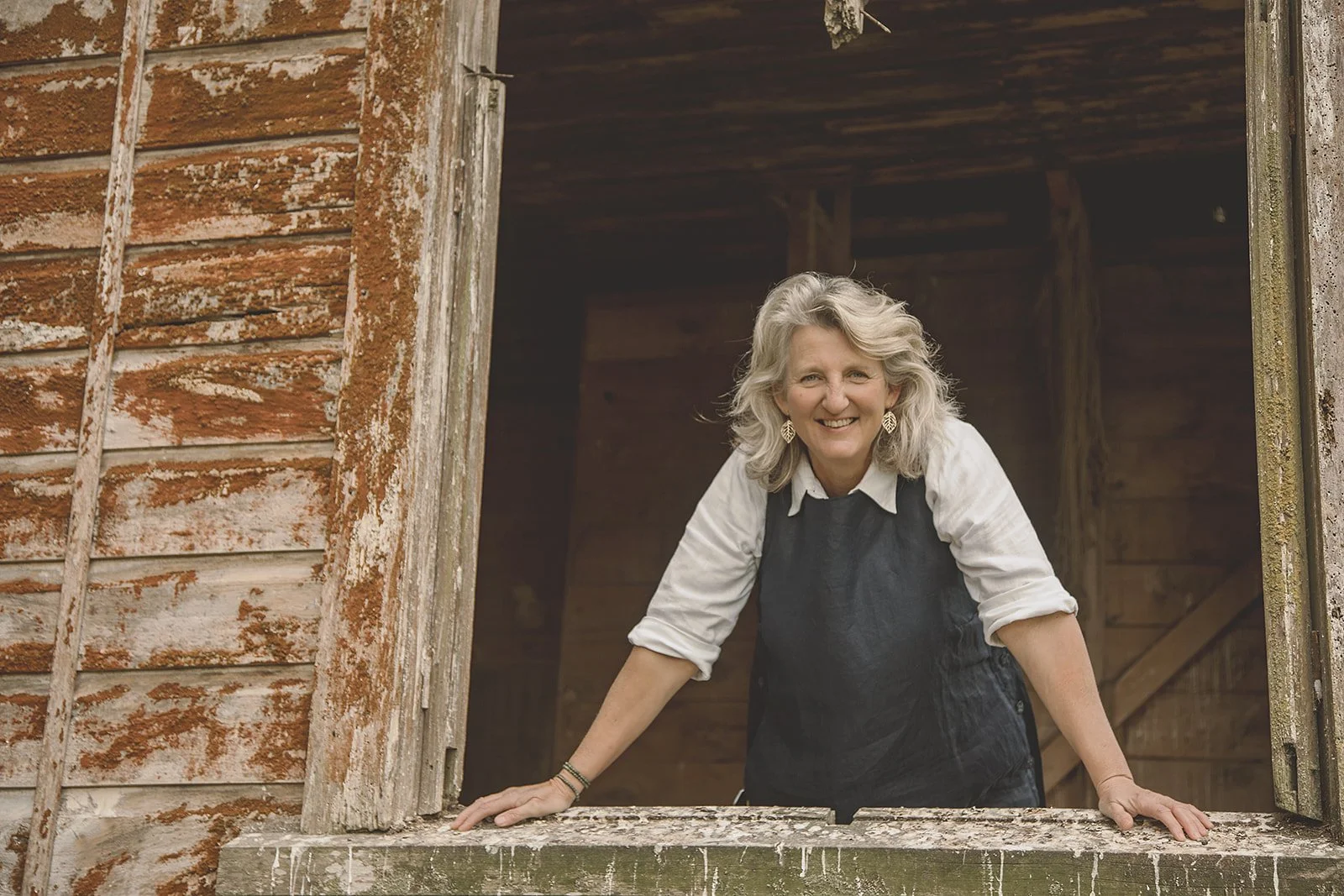
Tessa Kingsbury never intended to build an icon.
Born in Fairlie in 1971 and raised between places, movement became a familiar rhythm early in life. The daughter of a Mackenzie Country electrician and a nurse, she grew up with practicality on one side and care on the other — two threads that would quietly shape the way she moved through the world.
After studying architecture at the University of Queensland and graduating in 1999, Tessa specialised in hospital design, working on major projects across the globe. For years, life was airports, construction sites, deadlines, cities, and constant motion.
But somewhere amongst the scale of international work and transient living, another desire started tugging at her.
To stop moving.
To put roots down.
To build something deeply personal.
In 2017, she returned to New Zealand.
Auckland first.
Then Christchurch.
And finally Dunedin in October 2020.
What was meant to be another chapter slowly became home.
Returning Home
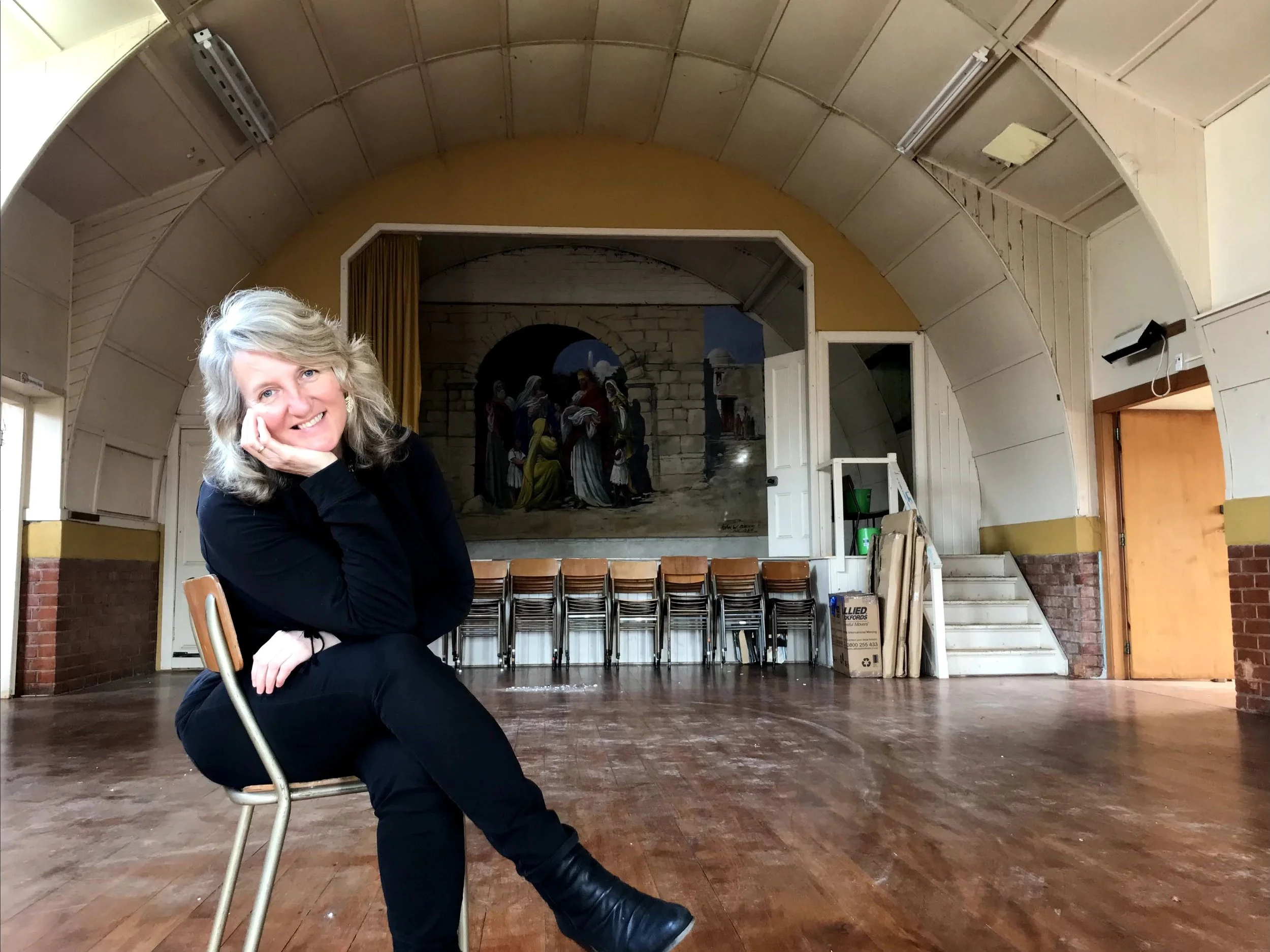
The Making Of The Glasshouse
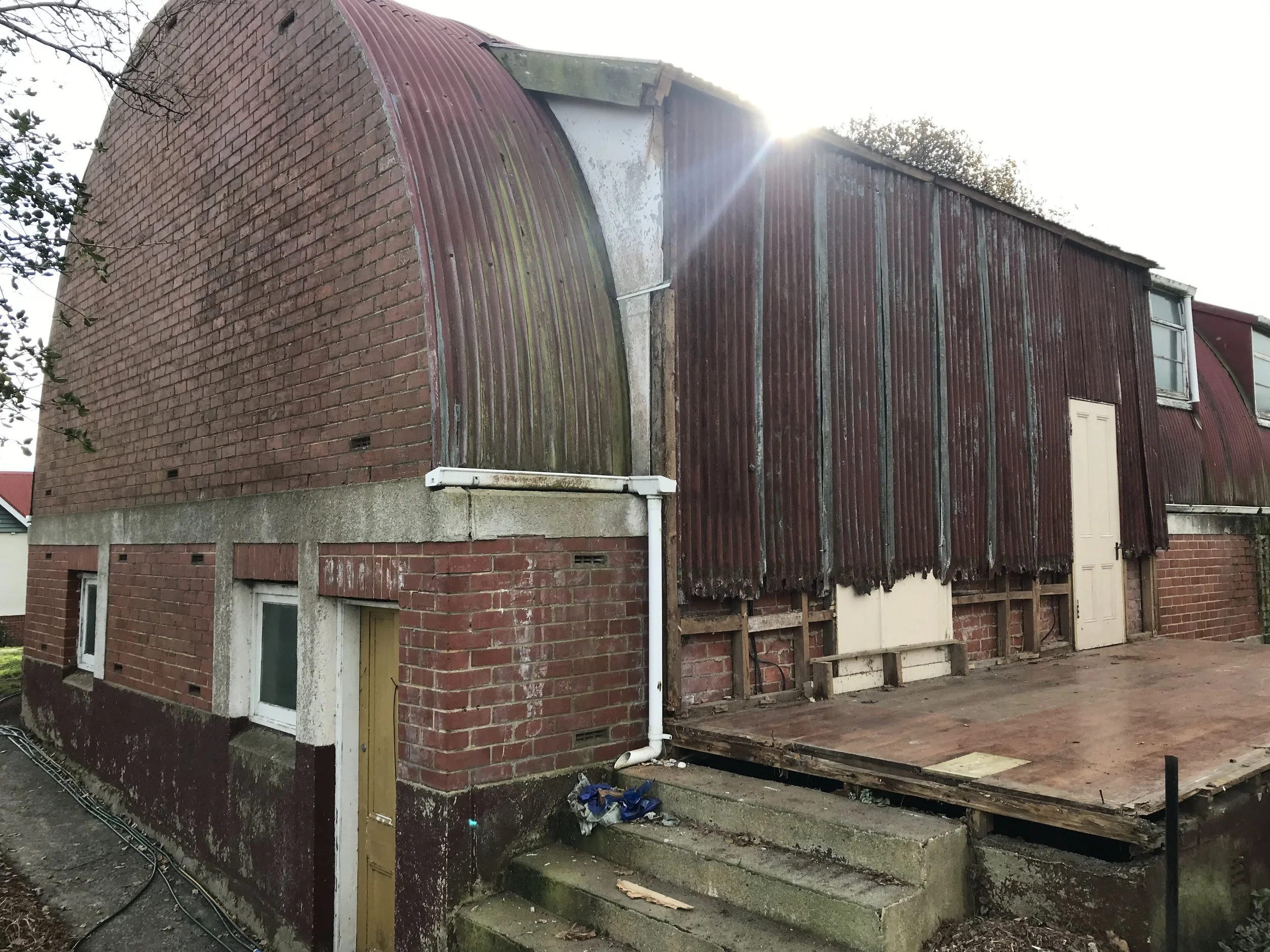
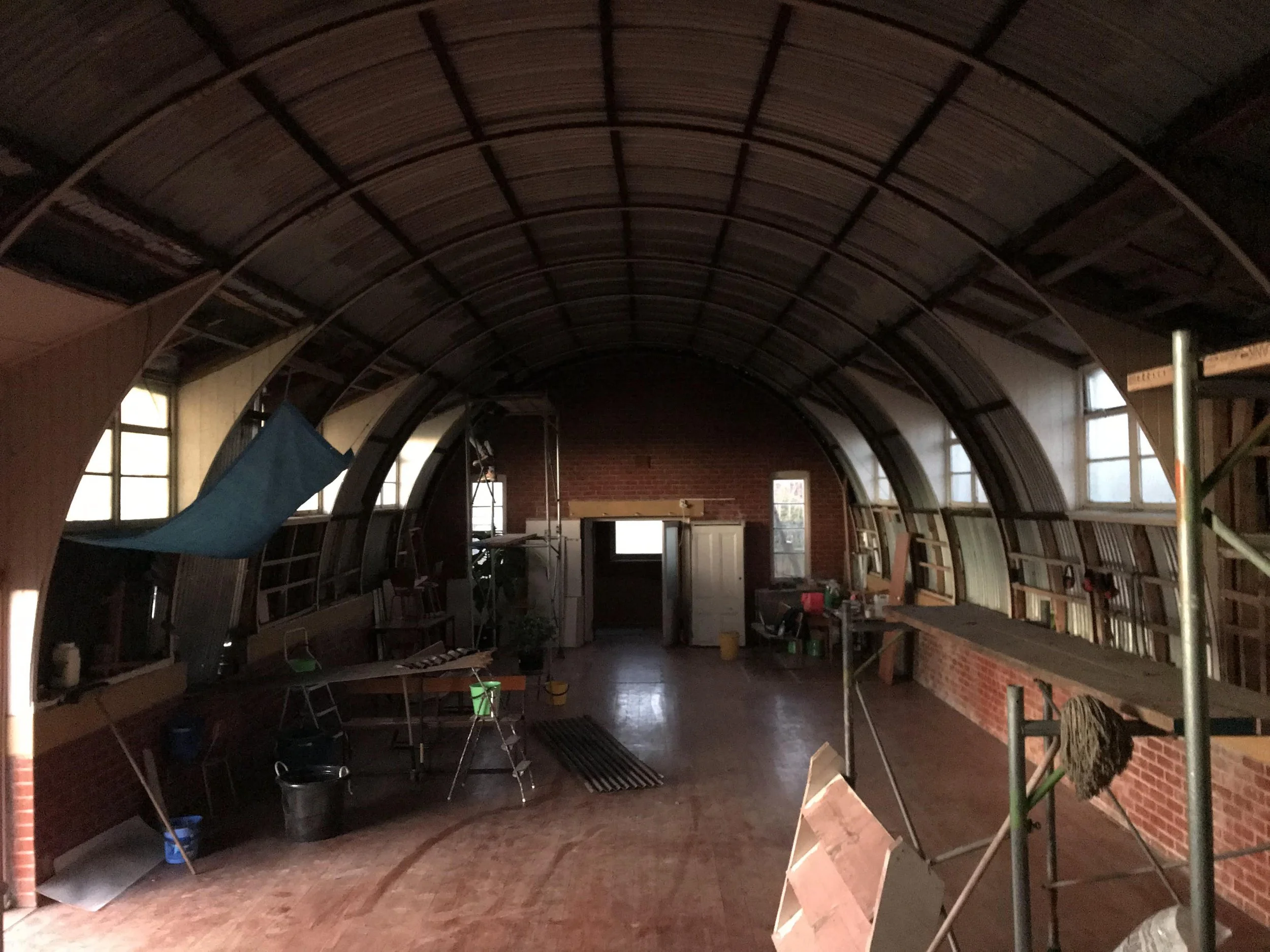
The structure itself carries a history far older than the Glasshouse.
Originally based on the iconic Nissen Hut design developed by British engineer Peter Norman Nissen during World War I, these curved steel structures were built for speed, function and resilience. Used as hospitals, accommodation, mess halls and storage facilities, they later evolved into Quonset huts and became common additions to schools and churches throughout New Zealand.
This particular hall had spent decades serving the local community before falling into disrepair.
Dark. Damp. Mouldy. Hidden beneath overgrowth.
But Tessa saw something else.
Her original offer included a sketch design, a handmade cardboard model and a personal letter to the Anglican Diocese outlining her vision for the future of the building.
The offer was accepted in May 2021.
What followed was 2 years of careful planning, restoration and transformation.
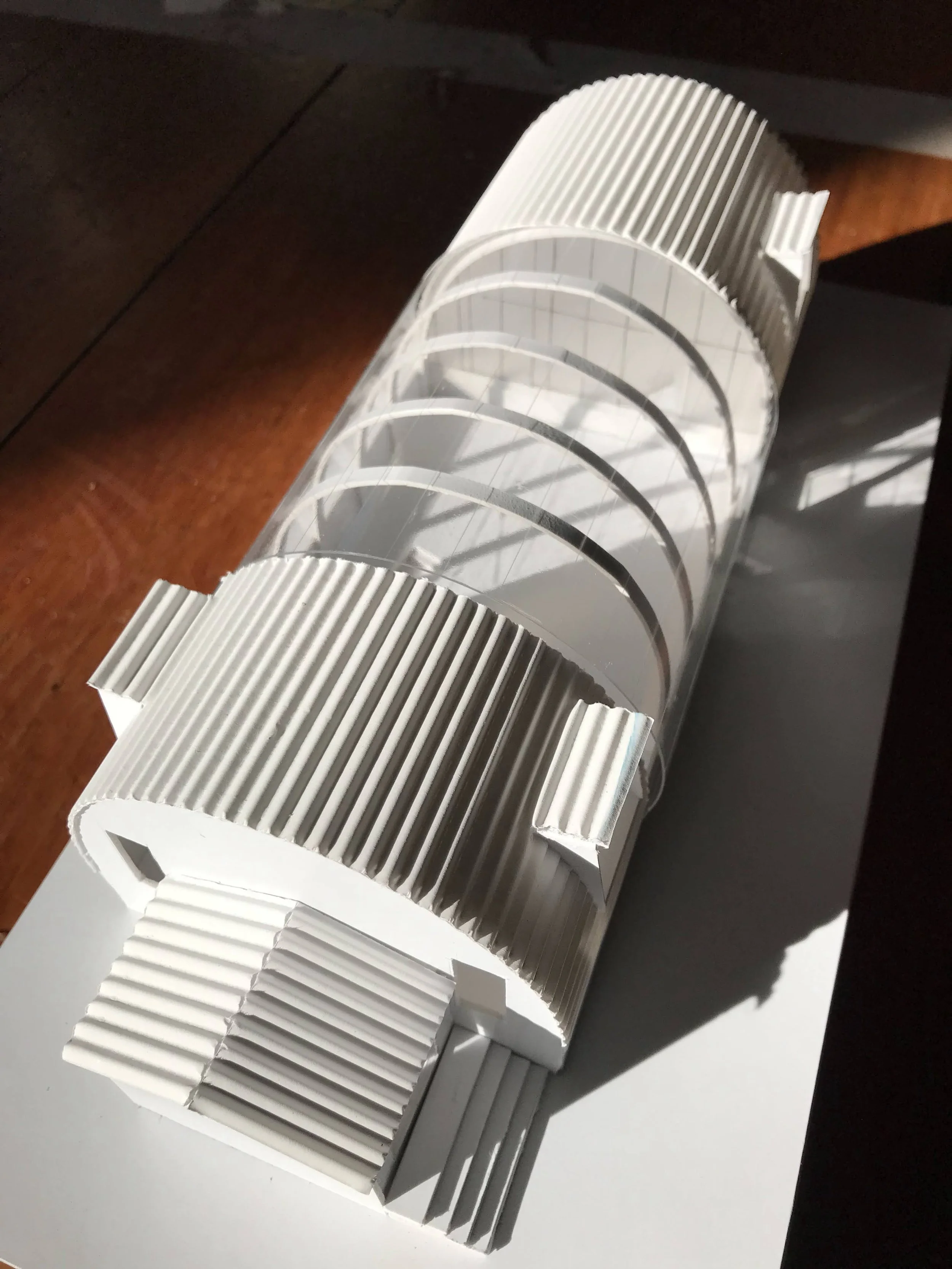
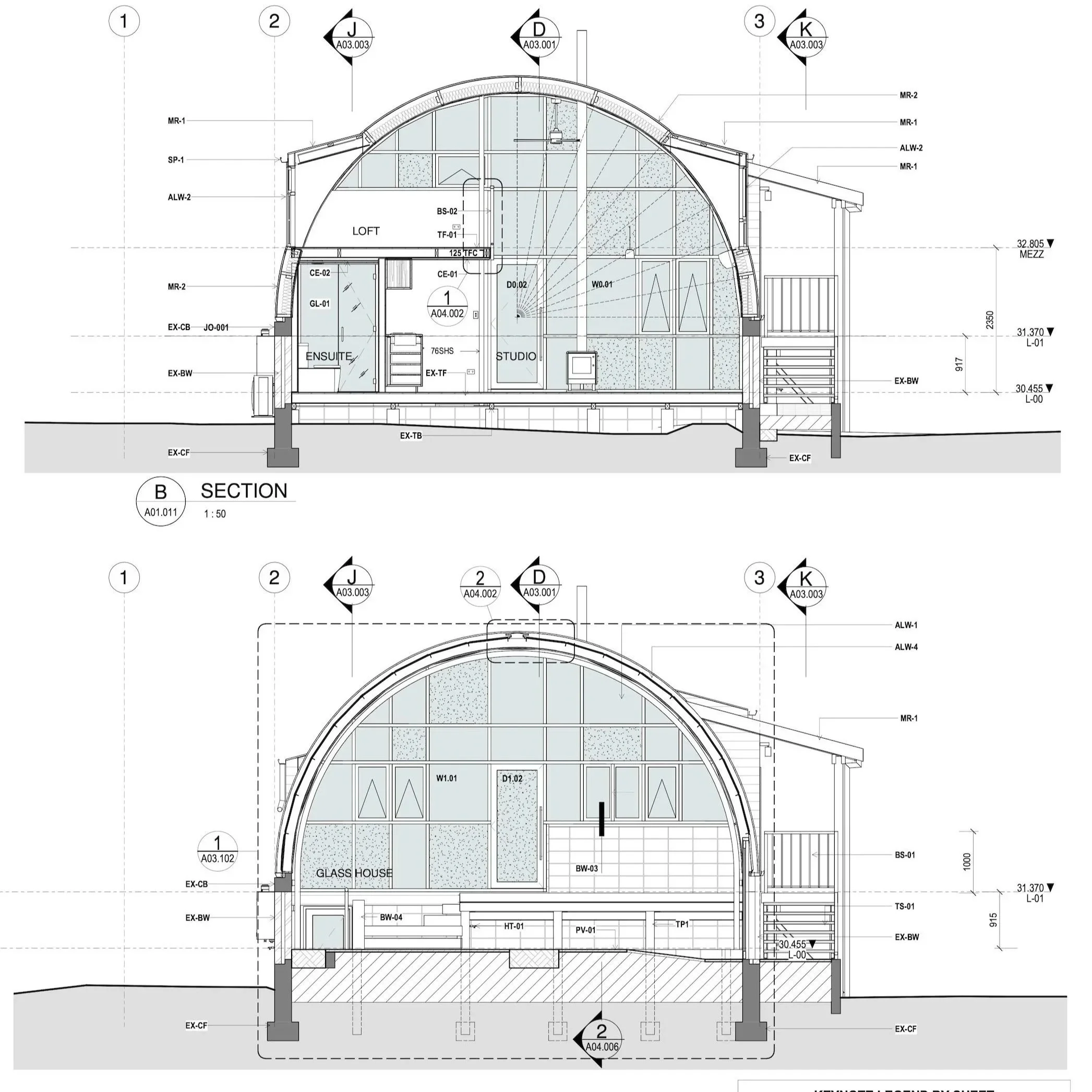
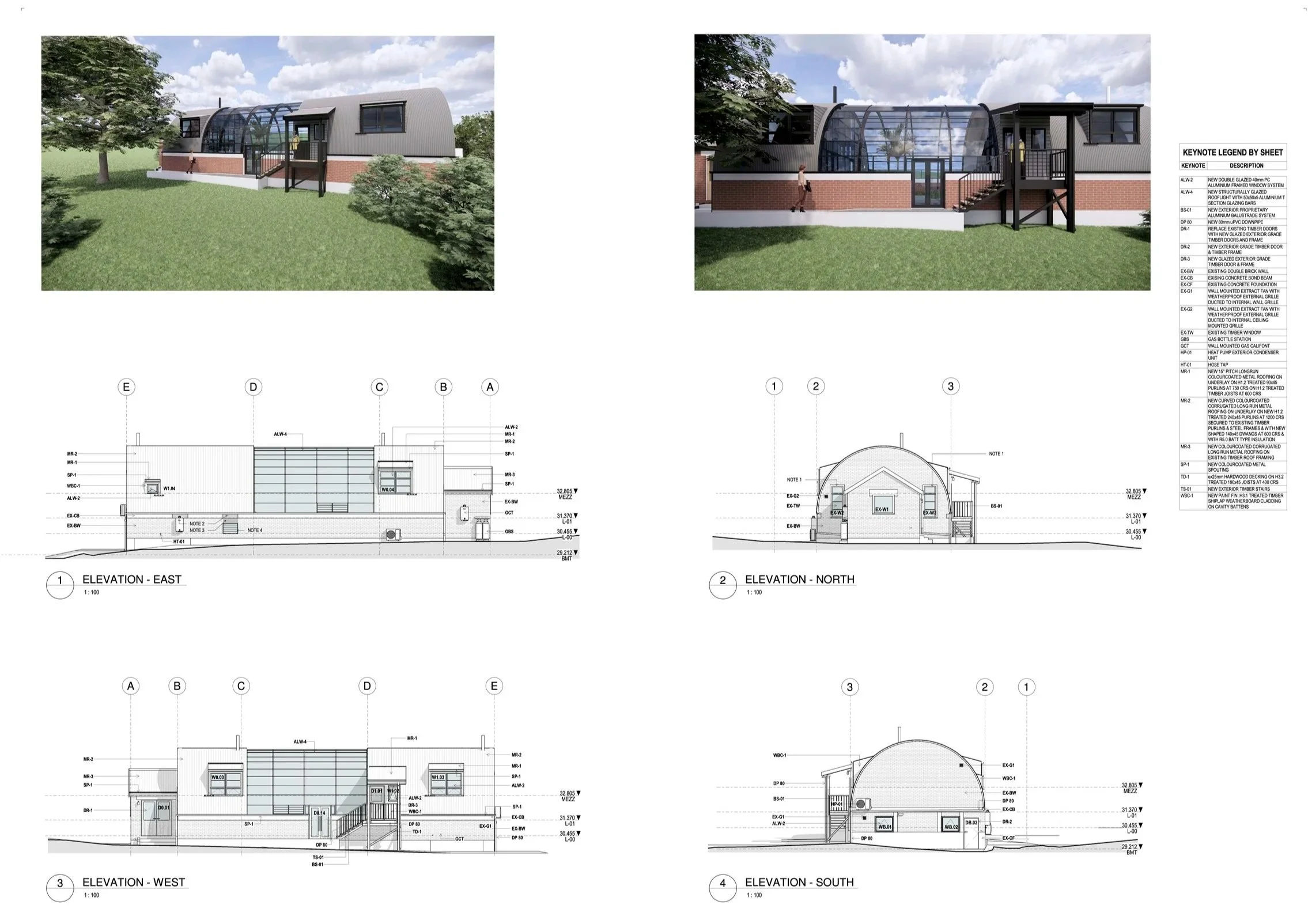
Even before settlement was finalised, evenings were spent onsite measuring, sketching and considering the many possibilities late into the night.
Plans were developed alongside a Christchurch-based technician - Andrew Wade, before finally being lodged with Dunedin City Council in early 2022.
Building consent was granted in May 2022.
… and then the real work began.
Trees were cleared to bring light back into the hall and dry out the site. Intrusive Sycamore trees were hand-processed into future firewood stacks. Sick Kōwhai trees were removed with reluctance. Soil was restored. Gardens and native trees were established.
And slowly, the Glasshouse emerged.
Not as a replacement of the old structure — but as a respectful conversation with it.
Today, the project blends architecture, memory, sustainability and nature into something difficult to categorise… but a joy to experience
Part home.
Part sanctuary.
Part experiment.
Part living artwork.
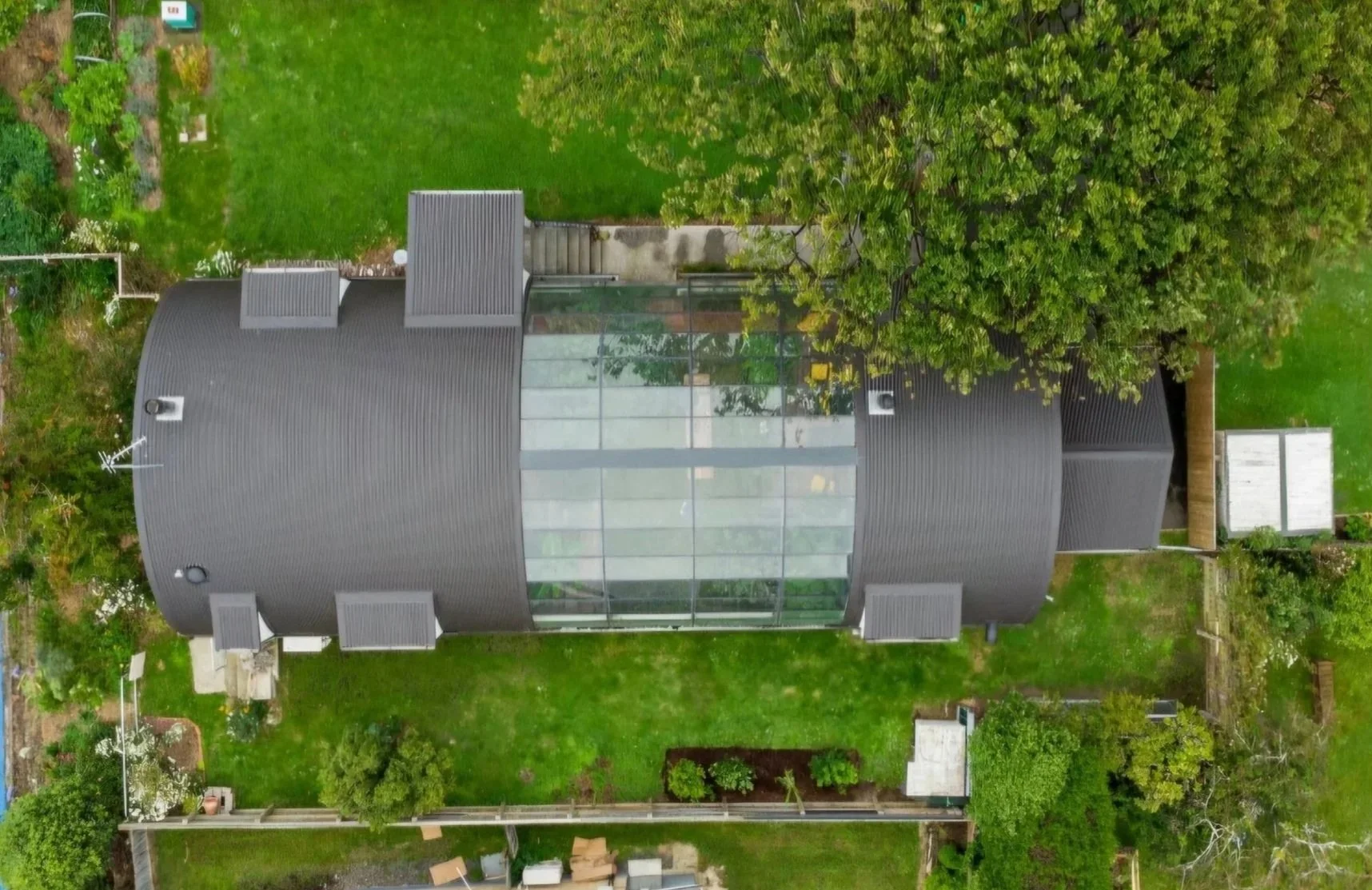
An Evolving Space
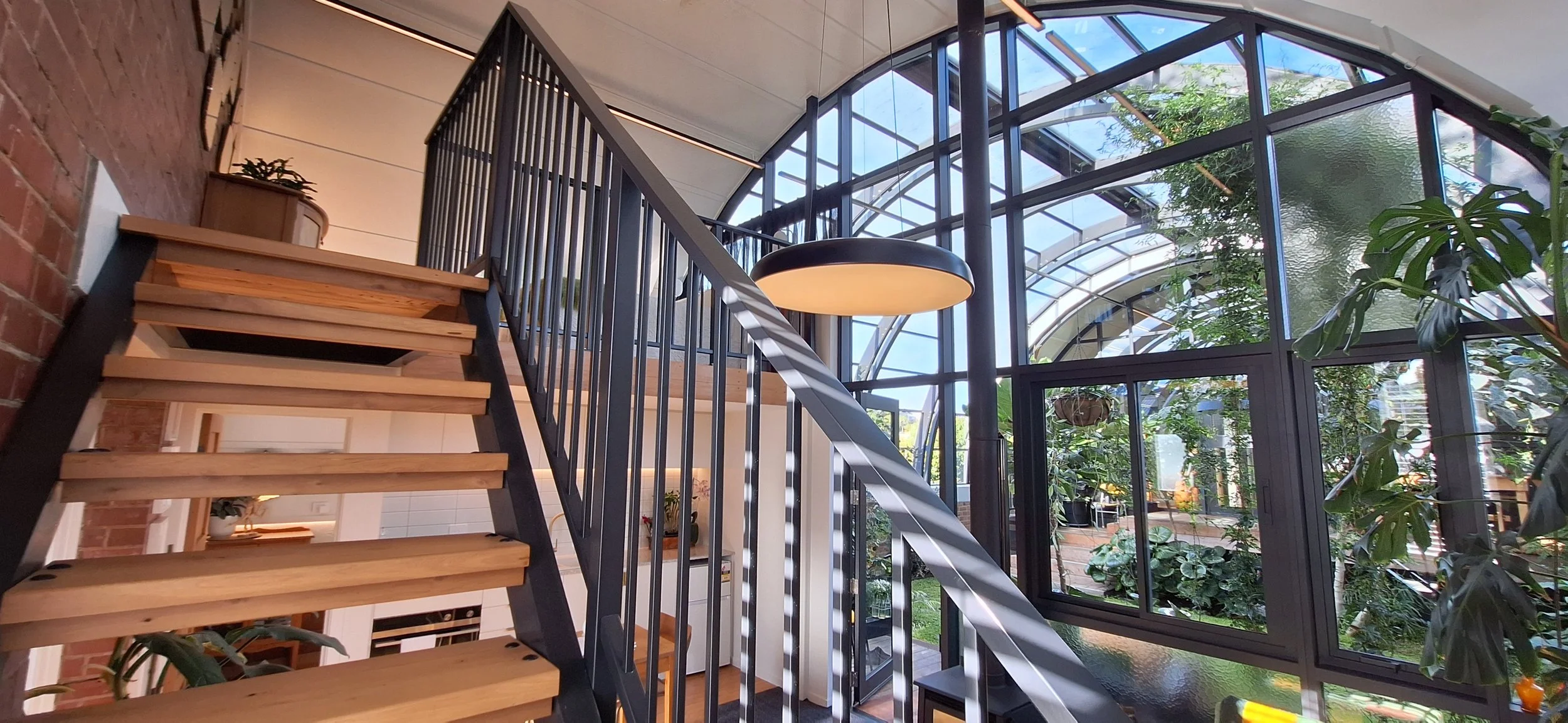

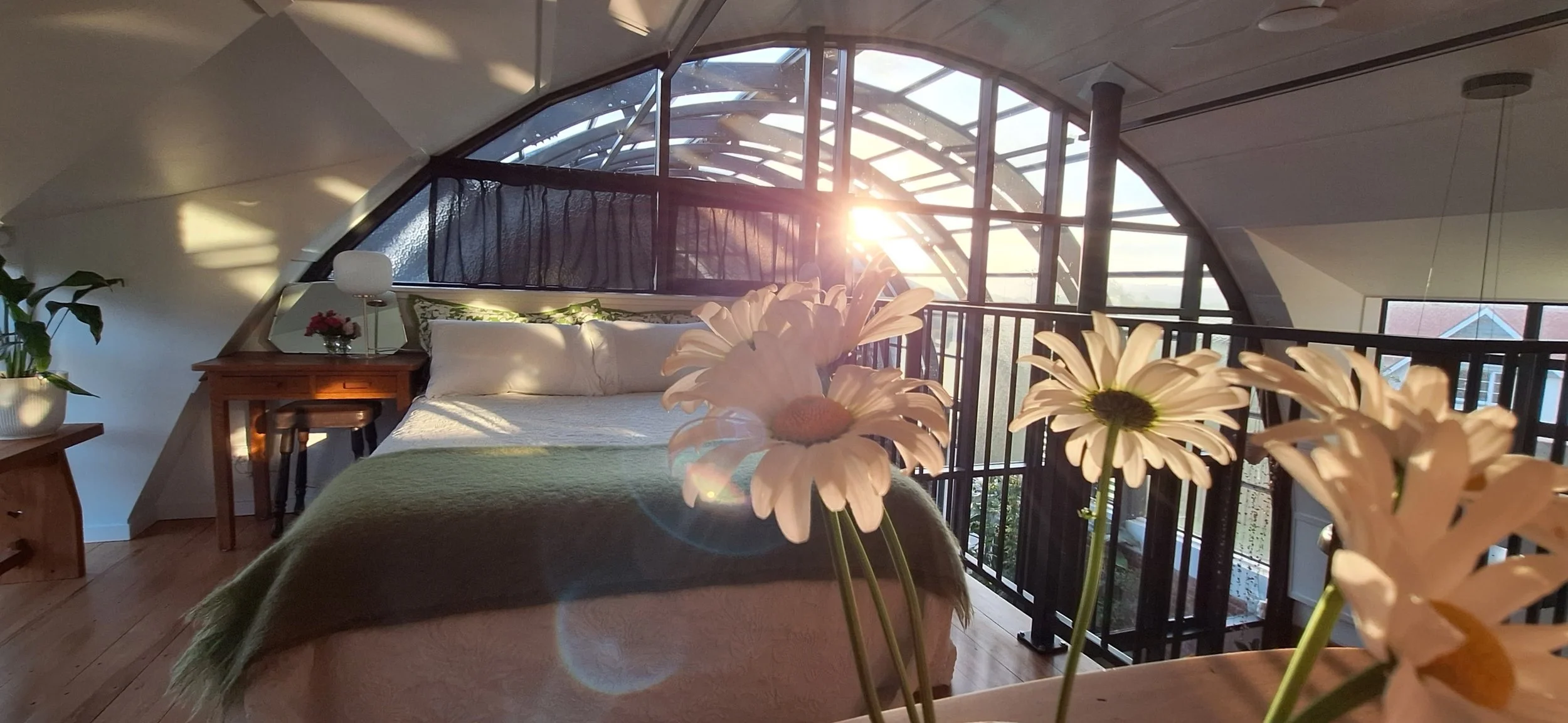
The Glasshouse was never designed to sit still.
What began as a deeply personal architectural project has slowly evolved into a place people gather, celebrate, stay, create and reconnect.
The guest studio opened in early 2024 and quickly became one of Dunedin’s most distinctive accommodation experiences. Since then, the property has hosted intimate weddings, long-table dinners, tours, creative events and travellers from around the world.
But the vision continues to evolve.
The Glasshouse remains a living project — shaped by curiosity, experimentation and the belief that architecture should feel alive. Intertwined with nature rather than separated from it.
There are always more gardens to plant. More ideas to test. More spaces to imagine.
And perhaps that’s the real story underneath all of this.
After decades of movement, airports, cities and large-scale projects around the world, the Glasshouse became something quieter in intention, yet infinitely richer in meaning.
A decision to stop long enough in one place to allow life to keep unfolding.
To let gardens grow wild.
To gather people around tables.
To restore something old rather than replace it.
To lift our gaze on biophilic and sustainable design philosophies.
To create space for beauty, connection and possibility to emerge over time.
The Glasshouse was never really about finishing something.
It was about finally staying.